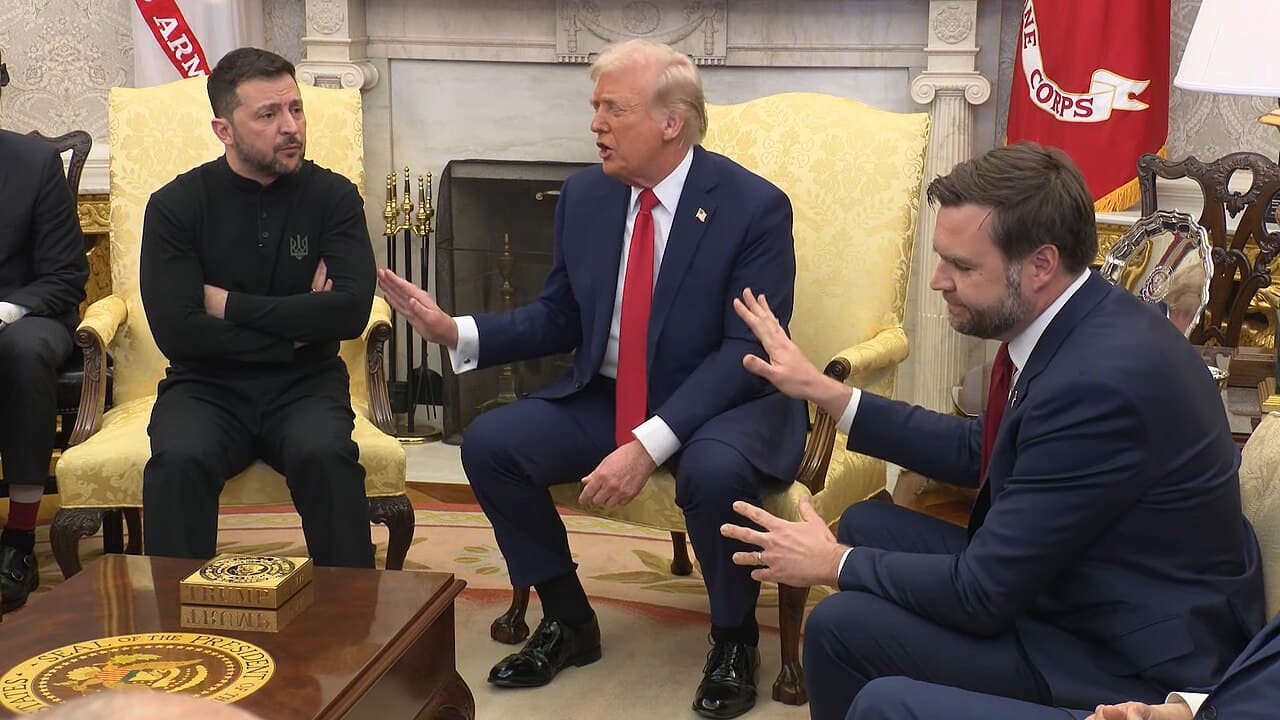
President Volodymyr Zelenskyy's stark admission this week—that American security guarantees come tethered to Ukrainian territorial concessions in Donbas—represents more than diplomatic candor. It marks the first time a Ukrainian leader has publicly acknowledged what diplomats have whispered privately for months: that Washington's definition of 'sustainable peace' increasingly diverges from Kyiv's definition of territorial integrity.
The Ukrainian president's comments to The Guardian signal a fundamental recalibration in how the United States approaches post-conflict security architecture in Eastern Europe. Where the Biden administration maintained public support for Ukraine's territorial sovereignty while engaging in private diplomatic flexibility, the current approach appears to prioritize regional stability over maximalist territorial claims.
What exactly is Washington proposing? According to diplomatic sources familiar with the negotiations, the American position centers on a phased security guarantee system that would extend NATO Article 5 protections to Ukraine—but only to territories under undisputed Ukrainian control. The Donbas regions of Donetsk and Luhansk would exist in a diplomatic gray zone, neither fully Ukrainian nor formally Russian, pending future political settlement.
This approach borrows heavily from the Cyprus model, where territorial division became the price of broader regional stability. American negotiators reportedly view this as pragmatic recognition of military realities on the ground, while Ukrainian officials see it as legitimizing territorial conquest through force.
The shift from the Biden administration's position is subtle but significant. Biden's team consistently framed territorial questions as matters for Ukraine to decide, while providing military aid to maximize Ukrainian leverage in any future negotiations. The current approach inverts this logic: security guarantees become the leverage to encourage territorial compromise.
European allies remain divided on the American framework. Poland and the Baltic states view territorial concessions as dangerous precedent that could embolden future Russian territorial claims. Germany and France see merit in trading land for lasting security architecture, particularly if it includes robust American military presence in the region.
The timing of Zelenskyy's public acknowledgment appears strategic. With Ukrainian military positions under increasing pressure and Western aid packages facing political headwinds, the Ukrainian leader may be preparing domestic opinion for compromises that seemed unthinkable two years ago.
What remains unclear is whether Russian leadership views the proposed framework as sufficient inducement to halt military operations. Moscow's territorial demands have expanded beyond Donbas to include wider security guarantees about NATO expansion and weapons deployments in Eastern Europe.
The diplomatic chess game now centers on sequencing: whether territorial arrangements precede security guarantees, or whether American security commitments provide sufficient assurance to enable territorial compromise. Each side views the other's preferred sequence as potential trap.
For Ukraine, the calculation involves weighing immediate territorial losses against long-term security gains through American alliance partnership. For Russia, the framework offers territorial gains but potentially cements Western military presence on its border through formal security guarantees to remaining Ukrainian territory.
What happens here will reshape how every contested border dispute unfolds for the next generation. American willingness to link security guarantees to territorial arrangements signals a return to spheres-of-influence thinking that many European allies thought had ended with the Cold War. Whether this represents pragmatic recognition of geopolitical realities or dangerous appeasement of territorial aggression may determine the framework's ultimate success or failure.