IAEA Director-General Rafael Grossi delivered a stark warning from Seoul on Wednesday: North Korea has made "very serious" advances in nuclear weapons production, completing construction of what appears to be a new uranium enrichment facility at the Yongbyon nuclear complex. The development represents the most significant expansion of North Korea's nuclear capabilities in years, coming as international attention has been focused elsewhere.
Speaking during his visit to the South Korean capital, Grossi confirmed intelligence reports of intensifying activity across North Korea's main nuclear complex. Work has accelerated at Yongbyon's 5-megawatt reactor, reprocessing unit, light water reactor, and other facilities, according to The Guardian. The regime is now believed to possess "several dozen nuclear warheads," with capabilities that have grown substantially since Kim Jong-un assumed power in 2011.
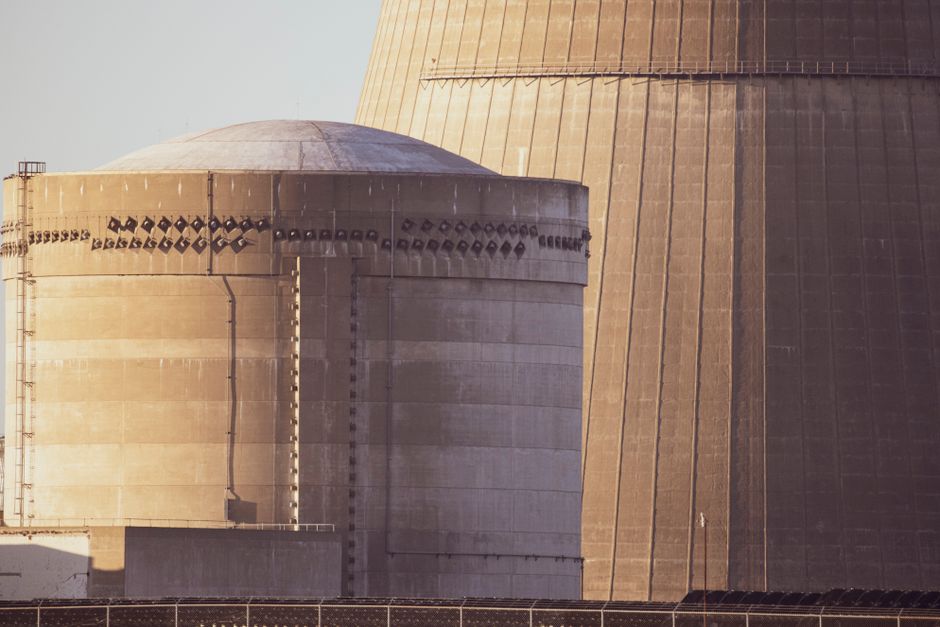
The most concerning development is a new building designed for uranium enrichment that satellite imagery suggests is nearing operational readiness. The Washington-based Center for Strategic and International Studies reported this week that the facility, along with another suspected enrichment site at Kangson near Pyongyang, has not been declared to international nuclear authorities — a violation that could "significantly increase the number of nuclear weapons North Korea could possess."
The strategic implications are profound. North Korea is thought to have assembled about 50 nuclear warheads, although some experts remain skeptical of claims that the regime can miniaturize them for attachment to long-range ballistic missiles. Since conducting its first nuclear test in 2006, Pyongyang has acquired what experts describe as a workable nuclear capability that includes intercontinental ballistic missiles capable of reaching the US mainland.
South Korea finds itself in an particularly vulnerable position. President Lee Jae Myung warned earlier this year that North Korea now produces enough fissile material to build 10 to 20 nuclear weapons annually while simultaneously improving its long-range ballistic missile technology. "At some point, North Korea will have secured the nuclear arsenal it believes it needs to sustain the regime, along with ICBM capabilities capable of threatening not only the United States but the wider world," Lee said in January.
The diplomatic picture offers little hope for reversal. North Korea has dismissed Lee's attempts to restart cross-border dialogue, while the collapse of Donald Trump's summit diplomacy during his first presidency left no viable negotiation framework. Reuters reported that Grossi found no evidence of Russian technology being used in North Korea's nuclear weapons program.
North Korea conducts first nuclear test
Kim Jong-un assumes leadership
Last nuclear test conducted
Kim vows "rapid expansion of nuclearisation"
New uranium enrichment facility nears completion
Under Kim Jong-un's leadership, North Korea has accelerated its nuclear weapons program in defiance of UN sanctions, in what observers believe is an attempt to reduce the likelihood that it could one day be a target for regime change by the US. The technical advances achieved represent a qualitative shift from the crude devices tested in the early 2000s.
For Japan and South Korea, the implications extend beyond regional security to fundamental questions of deterrence strategy. Both nations have relied on US extended deterrence — the nuclear umbrella — for decades, but North Korea's expanding capabilities challenge traditional security arrangements in Northeast Asia.
Grossi called North Korea's nuclear program a "clear violation" of UN Security Council resolutions, but acknowledged the IAEA's limited ability to verify the scope of activities. The agency has been locked out of the country for years, maintaining only "enhanced readiness" to resume inspections should access be restored.
What happens next may depend less on international diplomacy than on Kim Jong-un's own strategic calculus. Intelligence analysts believe the regime views nuclear weapons as the ultimate guarantee against regime change — a lesson drawn from observing international interventions elsewhere.
The concern among regional security experts is that once North Korea achieves what it considers a sufficient nuclear deterrent, excess weapons-grade material could find its way to international markets. Lee's warning about "a global danger" emerging once North Korea has nuclear "excess" reflects this nightmare scenario: a nuclear-armed state with few international constraints becoming a proliferator to non-state actors or other hostile regimes.