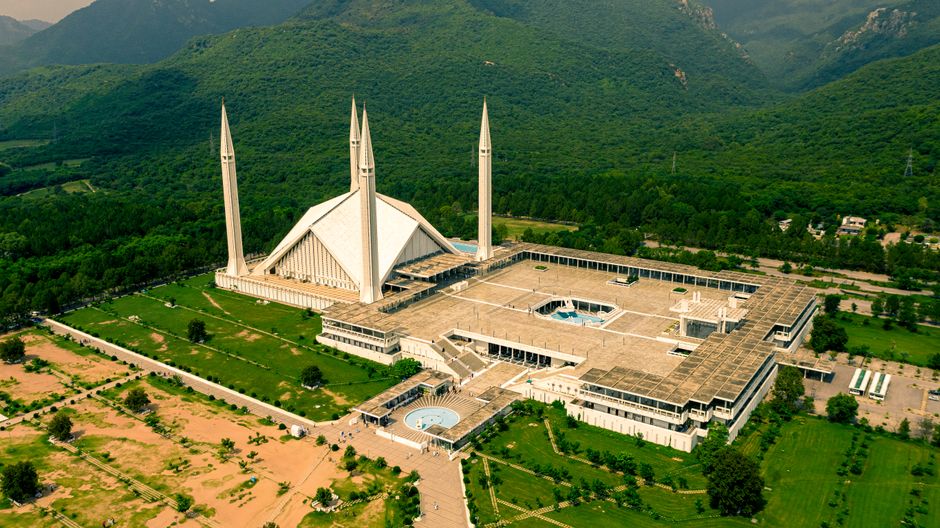
Vice President JD Vance departed Islamabad empty-handed Sunday morning after 21 hours of intensive negotiations with Iranian officials failed to produce a peace deal. The marathon talks, which Vance conducted in constant communication with President Trump, broke down over Iran's refusal to abandon its nuclear weapons program—the administration's core demand for ending the six-week conflict.
Speaking at a press conference before boarding his government plane at 7:08 a.m. local time, Vance blamed the collapse on Iranian intransigence. "We need to see an affirmative commitment that [Iran] will not seek a nuclear weapon, and they will not seek the tools that would enable them to quickly achieve a nuclear weapon," he said. "That is the core goal of the president of the United States."
The failure marks a significant setback for the Trump administration's approach to the crisis that began February 28 with US and Israeli strikes on Iran. The talks represented the first direct US-Iranian meeting in more than a decade and the highest-level discussions since the 1979 Islamic Revolution.
Iran's parliament speaker Mohammad Bagher Ghalibaf, who led Tehran's delegation, offered a sharply different assessment. He said his team had presented "constructive initiatives" but that the US had been "unable to gain the trust of the Iranian delegation." The ball was now in Washington's court, he added, "to decide whether it can gain our trust or not."
The Iranian delegation arrived Friday dressed in black, mourning the late supreme leader Ayatollah Ali Khamenei and others killed in the war. They carried shoes and bags belonging to children killed in the bombing of a school next to a military compound—a strike Reuters reported US military investigators believe America was probably responsible for.
Iran's foreign ministry downplayed the breakdown, with spokesperson Esmaeil Baghaei telling state broadcaster IRIB that "no one had held any expectation that they would reach an agreement within one session." He expressed confidence that contacts with Pakistan and other regional friends would continue.
Yet the semi-official Tasnim news agency painted a bleaker picture, saying "excessive" US demands had hindered any agreement. Beyond nuclear guarantees, Tehran is demanding control of the Strait of Hormuz, collection of transit fees through the waterway, payment of war reparations, and a broader regional ceasefire including Lebanon.
The talks unfolded in a locked-down Islamabad, with thousands of paramilitary personnel and army troops securing the capital of more than 2 million people. Pakistani sources described "mood swings from the two sides" and temperatures that "went up and down during the meeting."
Pakistan's foreign minister Ishaq Dar called on both sides to uphold their ceasefire commitment, saying his country would try to facilitate new dialogue "in the coming days." The mediating role represents a remarkable transformation for Pakistan, which was a diplomatic outcast just a year ago.
Meanwhile, the US military said it was "setting the conditions" to start clearing the Strait of Hormuz, reporting that two warships had passed through the strategic waterway. Iran's state media disputed this claim, denying any US ships had traversed the strait.
Before negotiations began, a senior Iranian source told Reuters that the US had agreed to release frozen assets in Qatar and other foreign banks. A US official denied any such agreement had been reached.
Trump, speaking to reporters at the White House Sunday afternoon, struck a defiant tone despite the diplomatic failure. The US has won the war "regardless of what happens" in the peace talks, he declared, while Israeli security cabinet minister Ze'ev Elkin warned on Army Radio that "the Iranians are playing with fire."
The collapse exposes the limits of the administration's rapid-response diplomacy in a region where patient, multilateral engagement has historically proven more effective. Unlike previous US interventions in simpler conflicts, Iran presents a nuclear-threshold state with extensive regional proxy networks—a complexity that 21 hours of intensive talks could not unravel.